Reading the Cups in the 1909 Tarot: Water, Cups and the Heart
Cups is the suit whose symbol is a cup. The 14 Cups of the 1909 original are full of water: streams spilling from a cup, a still pond, a river in the distance, the seashore. Water has long been the element that brings the heart and feelings to mind. In this column we follow the water and the people in the Cups pictures and read their story of feelings and relationships.
What appears again and again
- Water, sea and rivers: There is nearly always water in the background of a Cups card. Still water suggests a calm heart, and a flowing river suggests feelings passing by.
- Hands and gazes: Whether a cup is being offered, studied or ignored changes the temperature of the relationship.
- The element of water: Of the four elements, Cups belongs to water. It deals with anything that moves the heart: love, friendship, comfort and regret.
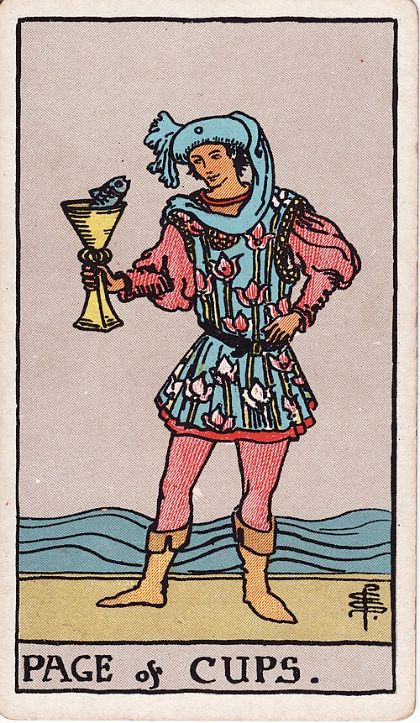
- Fish and the sea: A fish peeks out of the Page's cup, and fish leap in the King's sea. They stand for the intuition and imagination that rise up from inside.
Ace to Four: the heart fills up
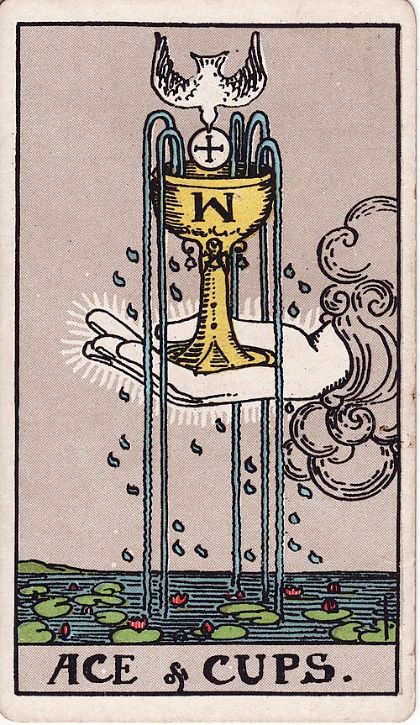
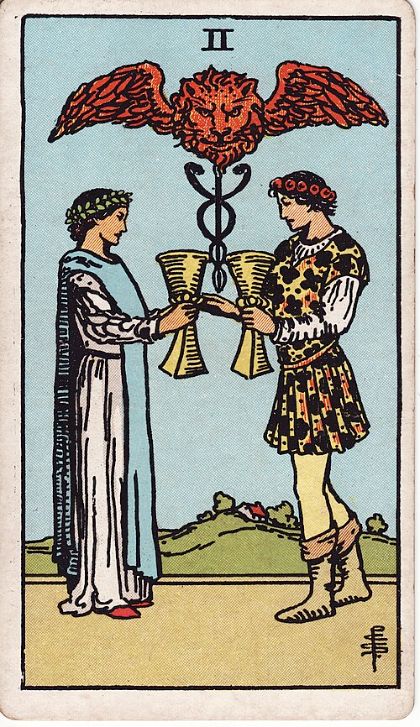
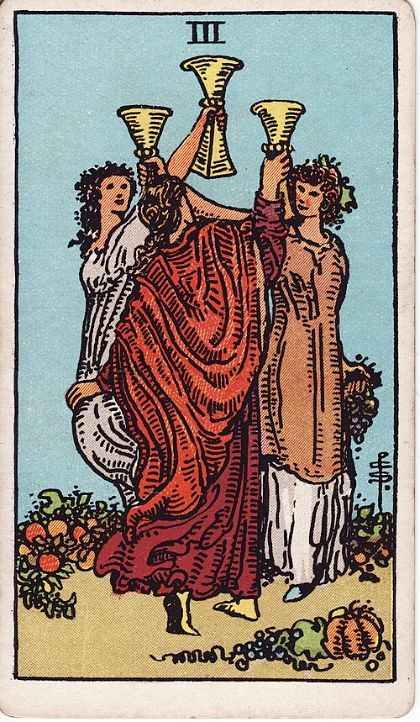
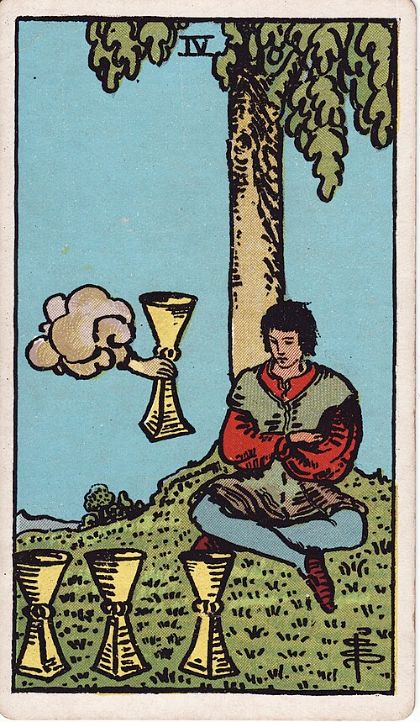
In the Ace of Cups, five streams of water pour from a cup held by a hand from a cloud, and a dove flies down from above. Water lilies float on the pond below. It is a beginning where the heart fills to the brim. In the Two, two people face each other and exchange cups. In the Three, three people lift their cups and dance together, a scene of celebration and friendship. In the Four, someone sits under a tree with arms crossed, staring at three cups, and does not notice the fourth cup offered by a hand from a cloud. It is the feeling of being bored with what is familiar.
Five to Seven: regret, memories and daydreams
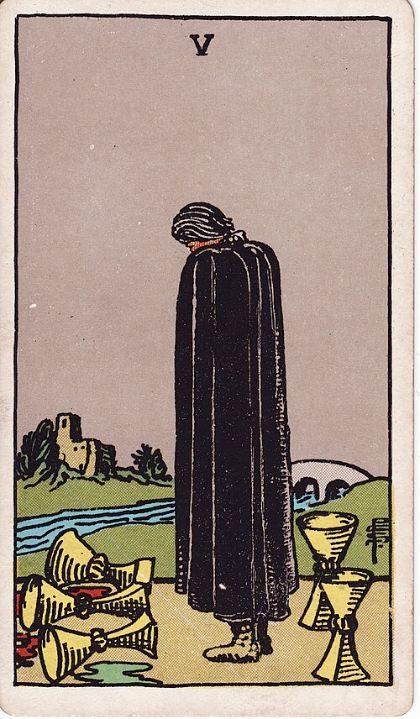
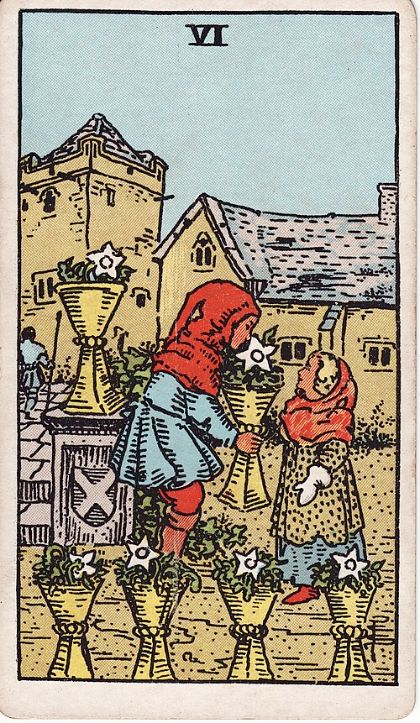
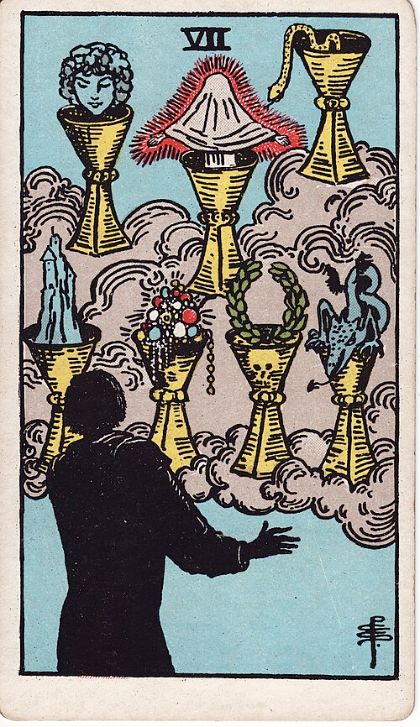
In the Five, a figure in a black cloak looks down at three spilled cups. Yet behind them two cups are still standing, and a bridge crosses the river toward a house. Even in disappointment, something remains. The Six shows two children sharing a cup of flowers, a warm scene that brings back memories and an innocent heart. In the Seven, someone gazes at seven cups floating on a cloud, each holding a different vision such as a castle, jewels, a wreath, a snake or a dragon. It is a moment when there are too many choices and the mind gets carried away.
Eight to Ten: leaving, filling and sharing
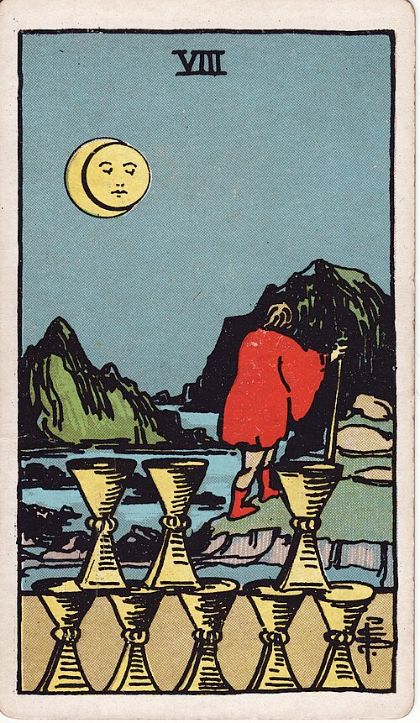
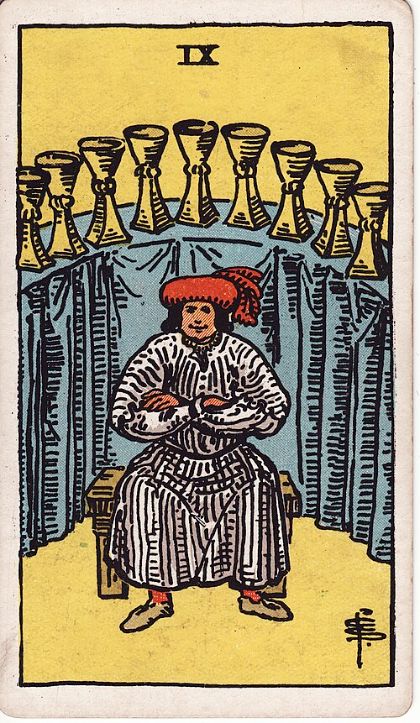
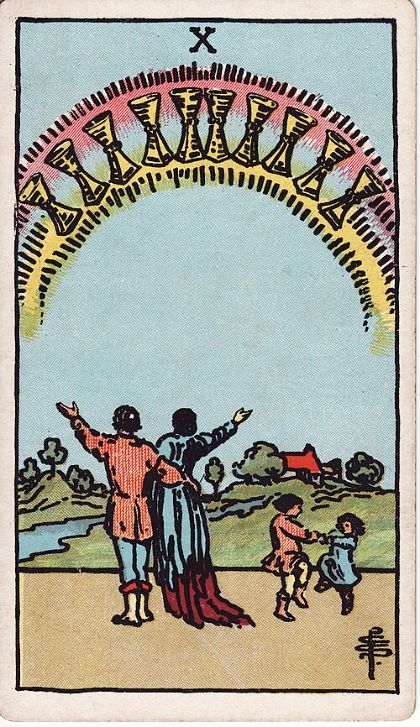
In the Eight, a figure with a walking stick turns away from eight stacked cups and walks toward the mountains under the moon, following a heart that has not been satisfied. In the Nine, a man sits with crossed arms and a contented face, with nine cups lined up on a long table behind him. It is the satisfaction of getting what you wished for. In the Ten, ten cups shine in a rainbow across the sky, while a couple below opens their arms and two children dance hand in hand. It is the warmest, fullest ending for the heart.
The four court cards
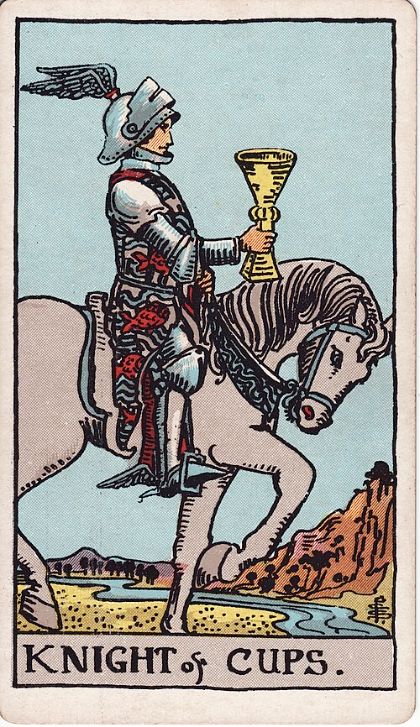
The Page of Cups stands by the sea, curiously watching a fish peek out of his cup, someone meeting an unexpected feeling or idea. The Knight of Cups does not gallop. His horse walks slowly while he carefully holds out a cup, and the wings on his helmet and heels make him look like a messenger of kind news. The Queen of Cups sits on a throne at the water's edge, quietly gazing into an ornate covered cup, someone who reads other people's hearts deeply. The King of Cups sits on a throne floating on the sea while a ship sails past and a fish leaps nearby, someone who keeps his balance even when feelings run high.
A small exercise for reading Cups
When a Cups card comes up, first check whether the cups are upright, tilted or spilled. An upright cup is a feeling being kept safe, an overflowing cup is a feeling you want to share, and a spilled cup is the sense of having lost something. Next, see who the person holding the cup is looking at, which tells you whether the feeling points toward you or toward someone else. Finally, notice whether the water in the background is still or flowing to read whether your heart is resting or on the move.
Cups cards often show up when you are thinking about a relationship with a coworker or about love. You can look up each card, such as the Three of Cups, in the dictionary, and read how the Minor Arcana differ from the Major in our guide to the Major and Minor Arcana. Sources for the images on this page are listed at the bottom.
The 1909 originals
Tap a picture to open its card meaning page.
Card meaning →
Card meaning →
Card meaning →
Card meaning →
Card meaning →
Card meaning →
Card meaning →
Card meaning →
Card meaning →
Card meaning →
Card meaning →
Card meaning →
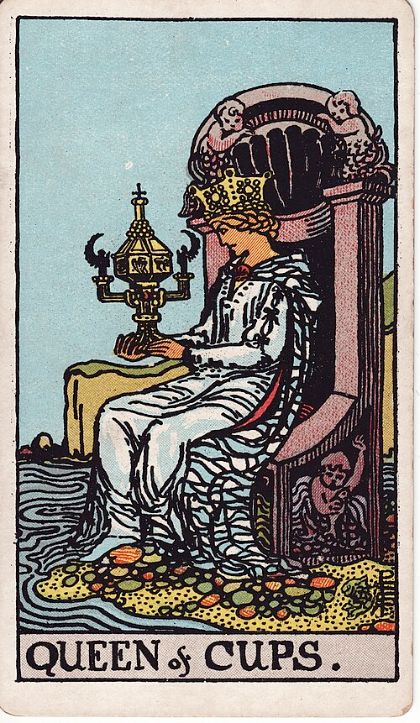
Card meaning →
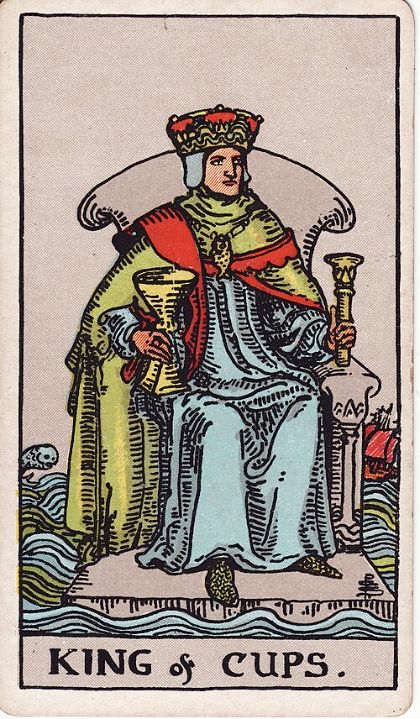
Card meaning →
Image sources
The images on this page are scans of the first printing (1909 to 1910) of the tarot drawn by Pamela Colman Smith, taken from public domain files on Wikimedia Commons. The original artwork is out of copyright, but later recolored editions may be separate copyrighted works. The card art used elsewhere on Fortune Alley is our own separate design.


