The Minor Arcana in the 1909 Tarot: When Number Cards Got Scenes
When people first flip through the 1909 original tarot, the number cards often surprise them more than the Major Arcana. Where you might expect three cups or three swords and nothing else, there are people, landscapes and small events. If you have already looked at the 22 Major Arcana in our original art column, this time let's talk about the other 56 cards, the Minor Arcana, as they appear in the original.
What number cards looked like before
In the tarot decks that were common before 1909, the number cards of the Minor Arcana looked a lot like ordinary playing cards. The Five of Cups showed five cups, the Seven of Swords showed seven swords, neatly arranged, and that was it. There were sometimes flowers or vines as decoration, but you could not guess a meaning just by looking. Readers usually memorized a set meaning for each number or kept a guidebook close by.
A scene on every one of the 56 cards
The 1909 original drew scenes on all 56 Minor Arcana: the 40 number cards and the 16 court cards. It kept the right number of symbols on each card, but it also showed what the person holding them was doing. Because of this, even someone seeing tarot for the first time could guess the story from faces and gestures alone. Many people say this change is a big reason so many people now teach themselves tarot.
Four cards to compare
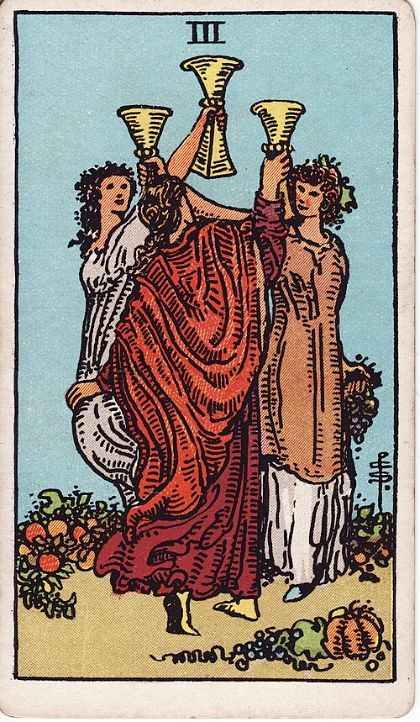
- Three of Cups: Where an older deck would show just three cups, three people raise their cups and dance together. Celebration and friendship come across at a glance.
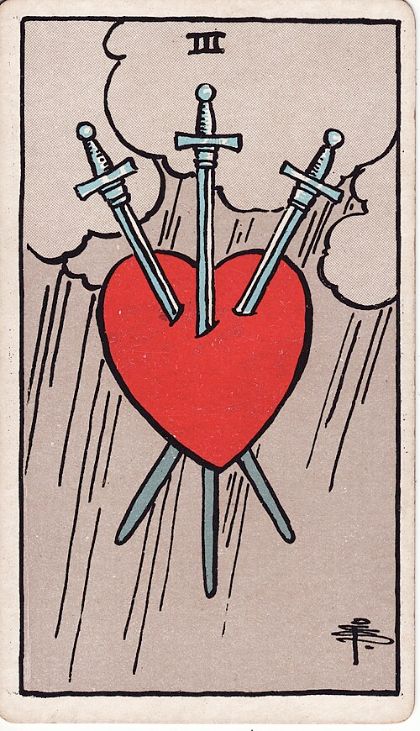
- Three of Swords: Under rain clouds, three swords pierce a red heart. There is no person in the picture, yet anyone can tell it is a moment of heartache.
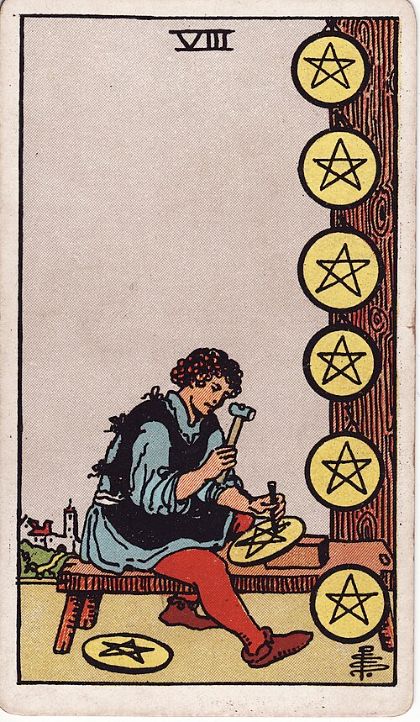
- Eight of Pentacles: A craftsman at his bench carves coin-shaped pentacles one by one and hangs the finished ones on a post. Steady skill-building is right there in the picture.
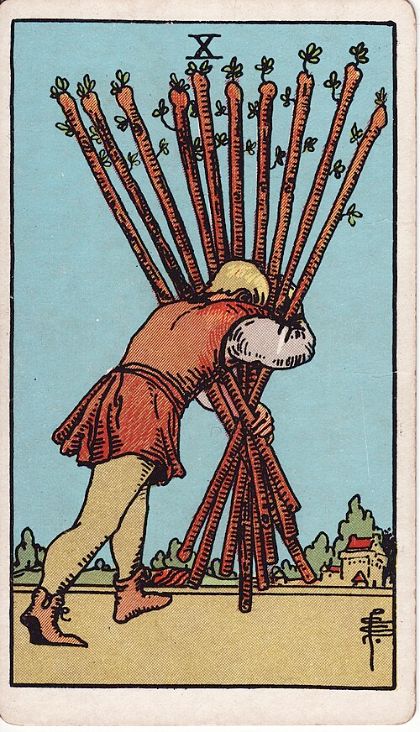
- Ten of Wands: One person hugs ten staffs at once and walks, bent over, toward a town. You can feel that the load is too heavy.
The flow from one to ten
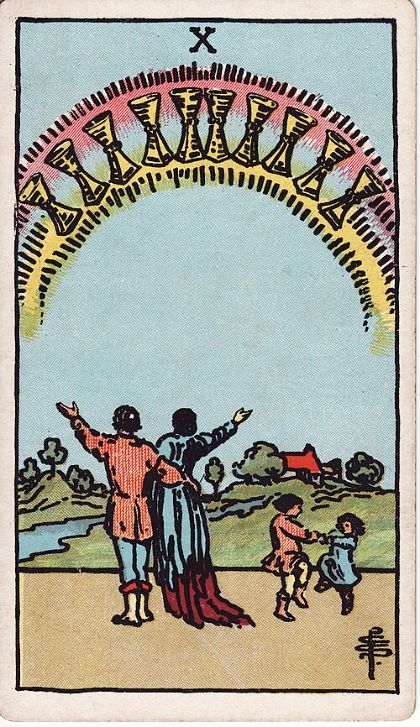
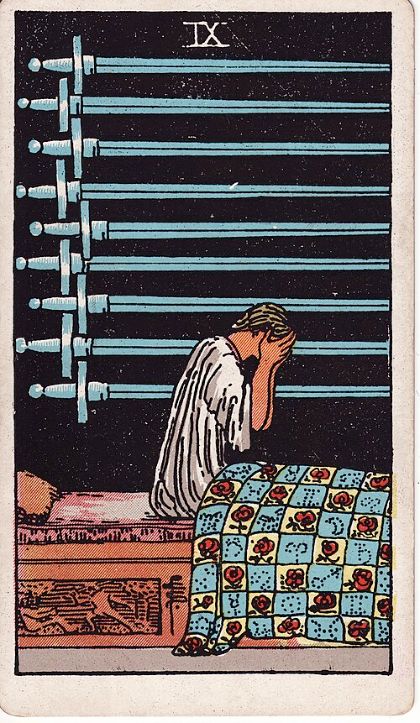
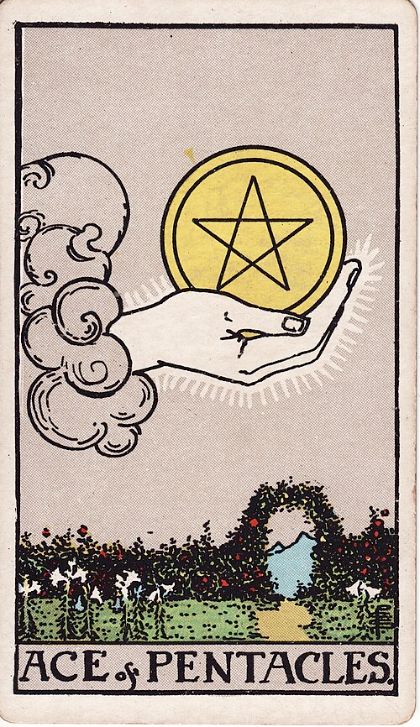
The numbers of the Minor Arcana run like a single story. The Ace shows a hand coming out of a cloud and offering the suit's symbol, the moment a new energy begins. Two and Three bring choices and first results, Four finds a moment of stability, and Five meets conflict or disappointment. Six and Seven get moving again and face a test, Eight and Nine go one step deeper, and Ten takes the suit's story all the way, either completing it or piling it up past the brim. The Ten of Cups shows a happy family under a rainbow while the Ten of Wands shows a heavy burden. They are both tens, but each suit has its own theme.
The four court ranks
After the number cards come the court cards: Page, Knight, Queen and King. The Page holds the suit's symbol and studies it with curiosity, a learner. The Knight rides forward on a horse, someone who acts. The Queen sits and holds the symbol close, someone who nurtures. The King rules over the symbol and takes responsibility. Within the same suit, the poses and gazes change with rank, so these cards read well as personalities or as the role you are playing right now. At work, you can think of the Page as a new hire who is just learning, the Knight as the one doing the hands-on work, the Queen as the senior who looks after the team, and the King as the leader who makes the call.
Tips for looking at the original Minor cards
When you first meet a Minor card, try talking to the person in the picture instead of memorizing a meaning. What are they doing right now? Is their face bright or gloomy? Is the sky clear or cloudy? Looking at these one by one, the mood of the card falls into place on its own. It also helps to count the symbols. The same kind of scene can sit at a different point in the story depending on its number. With a little practice reading the picture first, you can interpret your card of the day comfortably, even without a guidebook.
We will continue with closer readings by suit in the Wands and Cups, and Swords and Pentacles columns. You can read how Major and Minor differ in our guide to the Major and Minor Arcana, and find each card's meaning in the tarot card dictionary. Sources for the original images on this page are listed at the bottom.
The 1909 originals
Tap a picture to open its card meaning page.
Card meaning →
Card meaning →
Card meaning →
Card meaning →
Card meaning →
Card meaning →
Card meaning →
Image sources
The images on this page are scans of the first printing (1909 to 1910) of the tarot drawn by Pamela Colman Smith, taken from public domain files on Wikimedia Commons. The original artwork is out of copyright, but later recolored editions may be separate copyrighted works. The card art used elsewhere on Fortune Alley is our own separate design.


