Reading the Pentacles in the 1909 Original Art: A Story of Work and Daily Life
Pentacles is the suit that talks about the things you can hold in your hands. Its cards show discs marked with a star, a bit like coins, so the suit is often known simply as the money suit. Look at the 1909 originals, though, and you will find everyday scenes everywhere: people tending gardens, craftsmen at their benches, a home where grandparents and children gather. Here is how to read the fourteen Pentacles cards through their pictures.
The suit of Earth: work, money and daily life
Pentacles belong to the element of Earth. Earth changes slowly but stays solid, and a seed planted in it bears fruit with time. So these cards deal with what you can see and touch: the results of your work, the flow of your money and the small habits of daily life. The five-pointed star inside each disc is often read as a person standing with both feet on the ground. Picture your account on payday, a career built step by step, or something you made with your own hands, and the pictures start to feel familiar.
Gardens, workshops and castles: what the background says
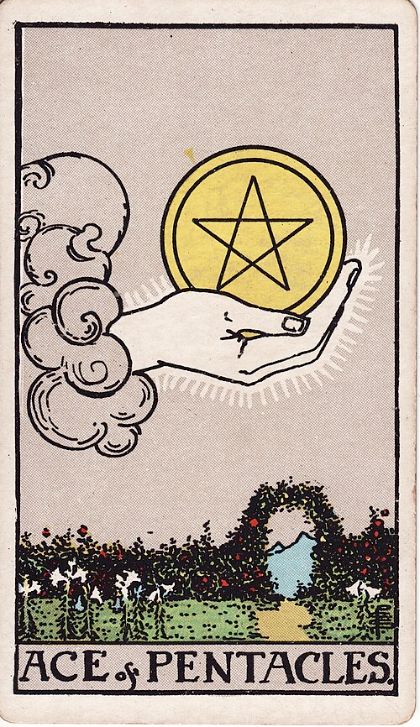
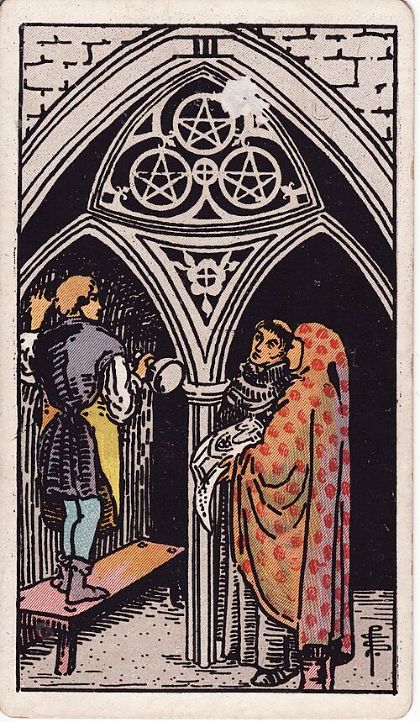
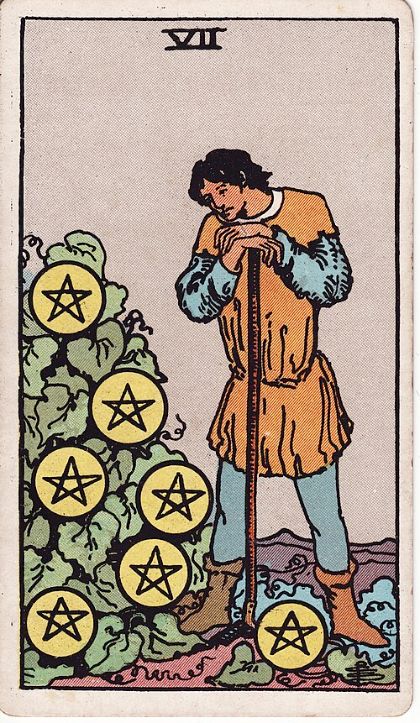
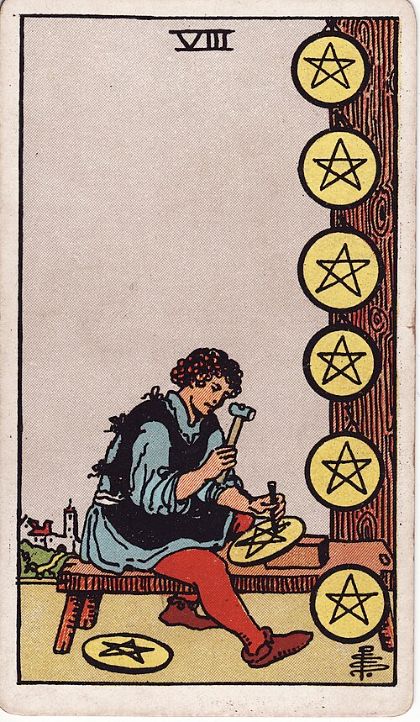
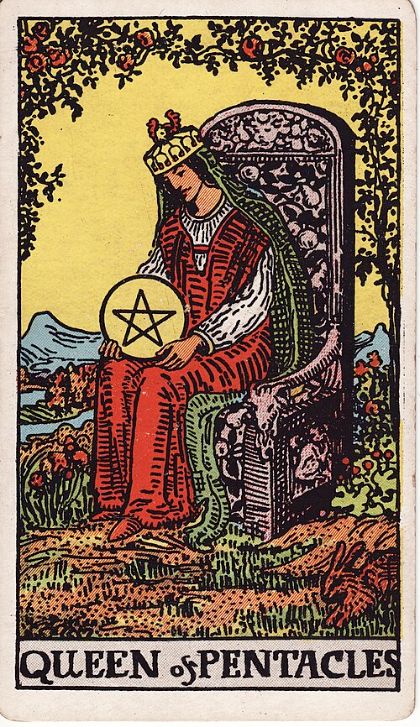
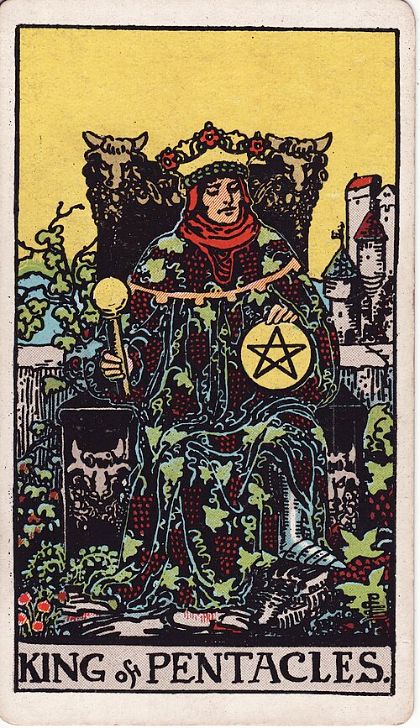
On Pentacles cards, always check the background. The Ace shows a garden of lilies and a rose hedge archway with mountains beyond it, like a gate from a well-tended home out toward new chances. The Three shows a craftsman shaping an arch in a church, the Eight a craftsman carving discs at his bench, and the Seven a farmer leaning on his hoe and looking at his crop. The Nine and the Queen sit in lush gardens, while the Ten and the King are close to houses and castles. A garden points to growing and caring, a workshop to skill and effort, and a house or castle to stability built over a long time.
From one to ten: like a year on the farm
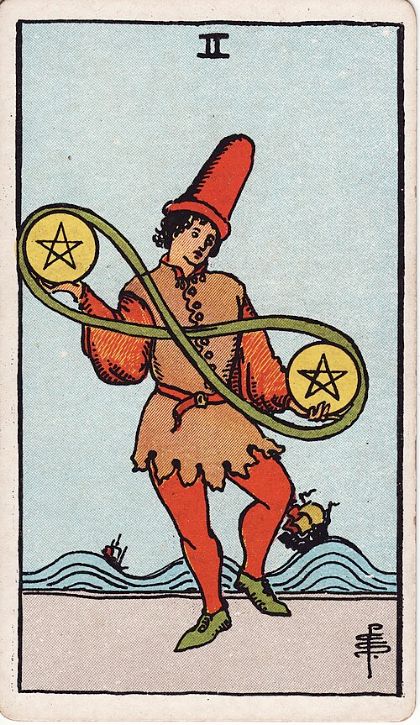
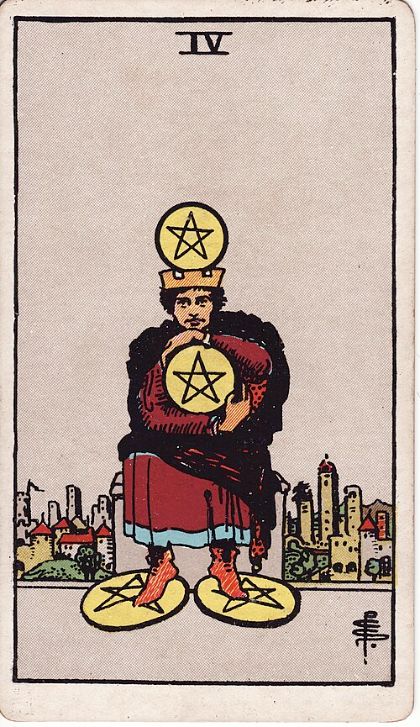
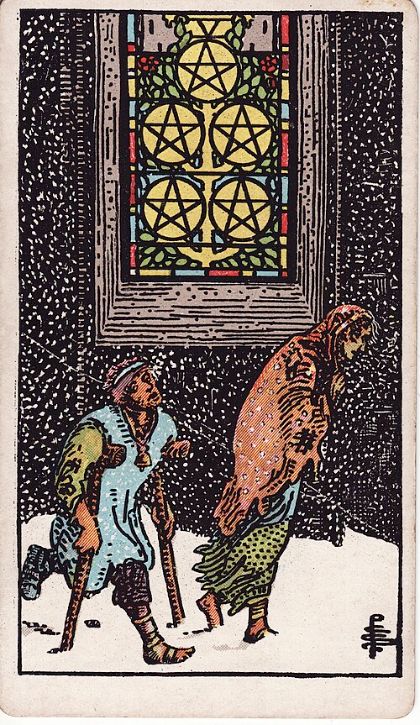
Follow the numbers and Pentacles reads like planting and harvesting. On the Two, a young man balances two discs joined by a loop shaped like an infinity sign, almost dancing, while ships ride big waves behind him. It looks a lot like a busy day of juggling several tasks at once. The Three is about working together, and the Four shows a man hugging his disc tightly, a picture of saving and protecting. The Five shows two people walking through the snow past a lit window, which can be read as a reminder that help may be closer than it seems.
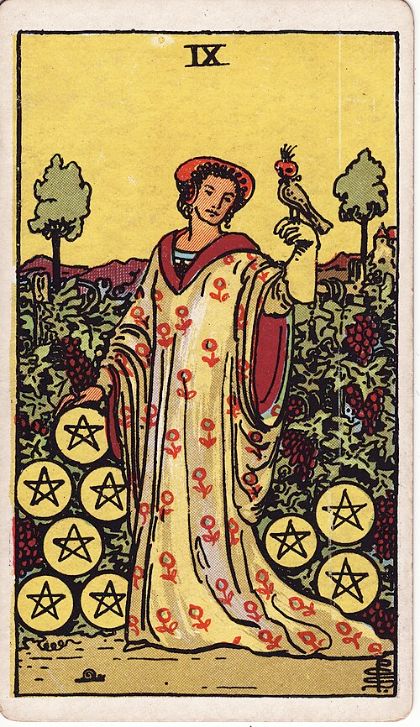
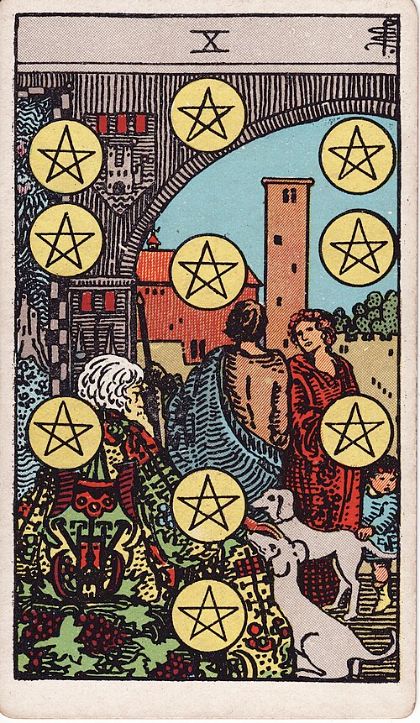
In the later cards, effort turns into results. The Seven is the time of waiting while looking at a crop that has not fully grown, and the Eight is a craftsman carving one disc after another with care. It shows better than any other card how repetition and practice turn into skill, so office workers often find it especially relatable. See the Eight of Pentacles meaning for more. The Nine shows a woman in a garden with a bird on her hand, the ease you have built for yourself, and the Ten brings an old man, a couple, a child and dogs together in one scene, a picture of stability shared across generations.
Court cards: four ways of working the land
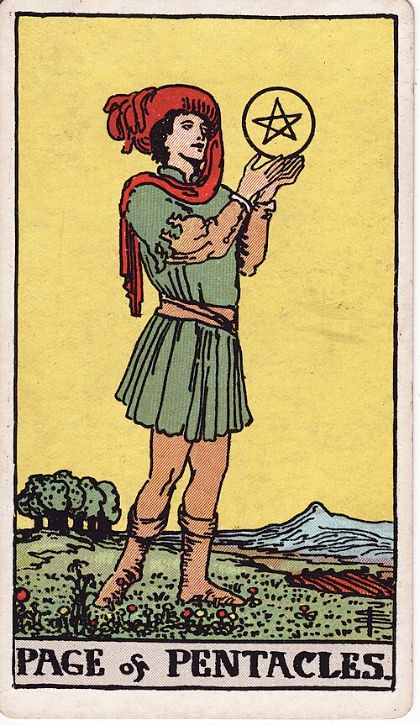
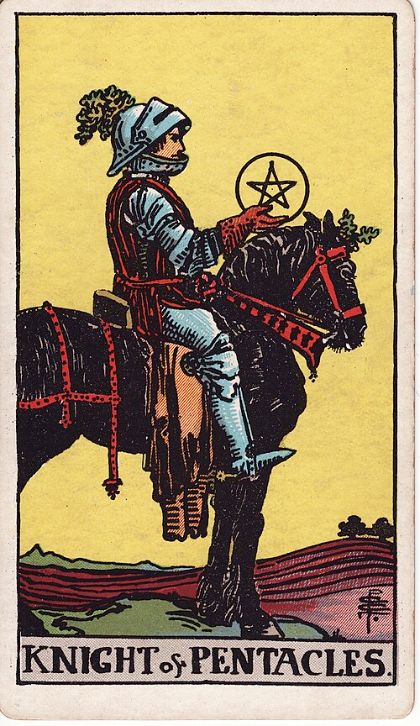
The Page stands in a field holding a disc up in both hands and studying it quietly, the focus of someone who has just started learning. Unlike the knights of the other suits, the Knight sits on a heavy black horse that stands perfectly still, slow but steady. The Queen sits in a garden draped with roses, cradling the disc on her lap, with a rabbit in the corner, the strength of someone who looks after daily life with warmth. The King wears a robe covered in grapevines and sits on a throne carved with bull heads, someone who protects what he has built and shares it generously.
Small details worth noticing
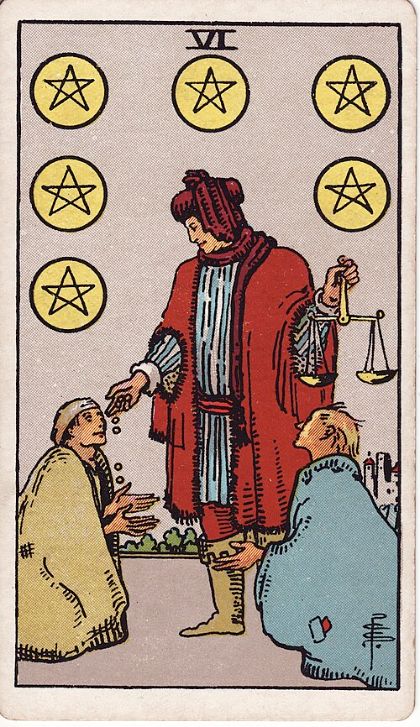
Animals and plants turn up often on Pentacles cards. The snail and bird on the Nine, the Queen's rabbit and the dogs on the Ten bring to mind a comfortable, unhurried life, while grapes, roses and lilies suggest things that have grown well and ripened. Look at the hands, too. Whether a figure grips the disc tightly, holds it lightly or hands it to someone else says a lot about their attitude to money and work.
Something to remember with Pentacles
Pentacles cards talk less about one big break and more about small habits today. A disc on the card is not a promise that money is coming. Read it instead as a nudge to look at the foundations of your daily life. You can find the other suits and the Major Arcana in the Minor Arcana originals and the 1909 original tarot art. The image sources for this page are listed at the bottom.
The 1909 originals
Tap a picture to open its card meaning page.
Card meaning →
Card meaning →
Card meaning →
Card meaning →
Card meaning →
Card meaning →
Card meaning →
Card meaning →
Card meaning →
Card meaning →
Card meaning →
Card meaning →
Card meaning →
Card meaning →
Image sources
The images on this page are scans of the first printing (1909 to 1910) of the tarot drawn by Pamela Colman Smith, taken from public domain files on Wikimedia Commons. The original artwork is out of copyright, but later recolored editions may be separate copyrighted works. The card art used elsewhere on Fortune Alley is our own separate design.


