Reading the Swords in the 1909 Original Art: A Story of Thoughts and Decisions
Swords can feel like the heaviest suit in the tarot. A heart pierced by blades or a person sitting up in bed with their face in their hands can look frightening at first. Look slowly at the 1909 originals, though, and you will see that Swords is not a suit of bad omens. It is an honest picture of what goes on inside our heads: thoughts, words and decisions. Here is how to read the fourteen Swords cards through their pictures.
The suit of Air: thoughts, words and decisions
Swords belong to the element of Air. Air is invisible yet always moving, and so are our thoughts. A sword is a tool for cutting and dividing, so these cards show the mind that judges, sorts things out and makes choices. The sharp comment you make in a meeting, the email you rewrite again and again late at night, the moment you quietly reach a conclusion: all of that is Swords territory. A blade cuts both ways, and so does thinking. It can protect us, and it can also wear us down. Keep that in mind and the pictures become much easier to read.
The sky shows the state of mind
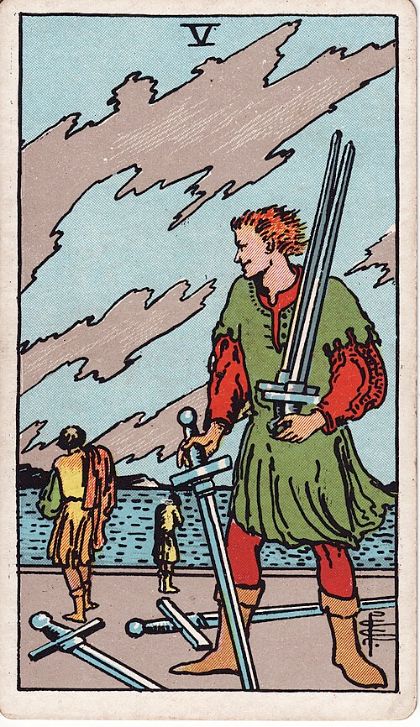
The first place to look on a Swords card is the sky. On the Ace, a hand reaches out of a cloud holding a crowned sword perfectly upright, the moment your thinking becomes clear. The Three, by contrast, shows rain clouds and pouring rain, and the Five has jagged, torn clouds. On the Page and the Knight, wind bends the trees and scatters the clouds. Whether the sky is clear, overcast or windy tells you a lot about the mental weather a card describes. When water appears as well, many readers take it as a sign that feelings are mixed into the thinking.
From one to ten: a path the mind travels
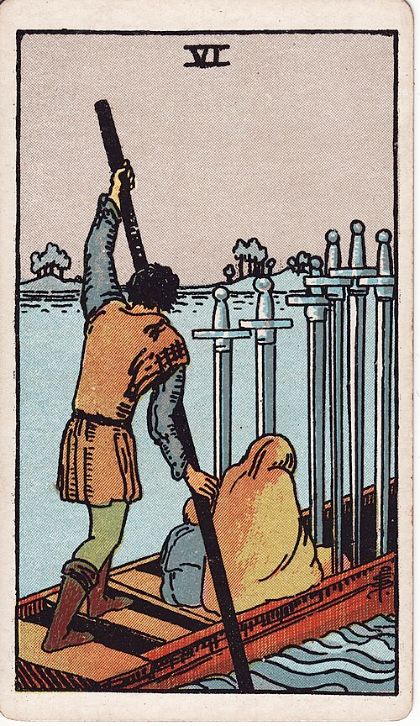
Follow the numbers and the suit reads like a story. The blindfolded woman on the Two is putting off a decision for now. The knight lying at rest on the Four is a tired mind taking a break. The small boat on the Six is crossing from rough water toward calm water, so it reads as slowly getting better after a hard stretch.
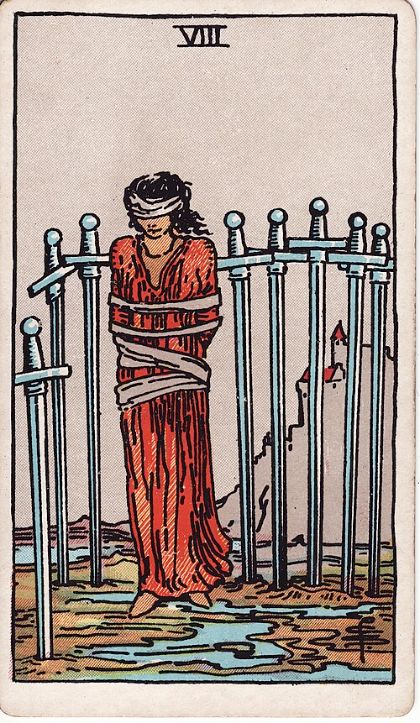
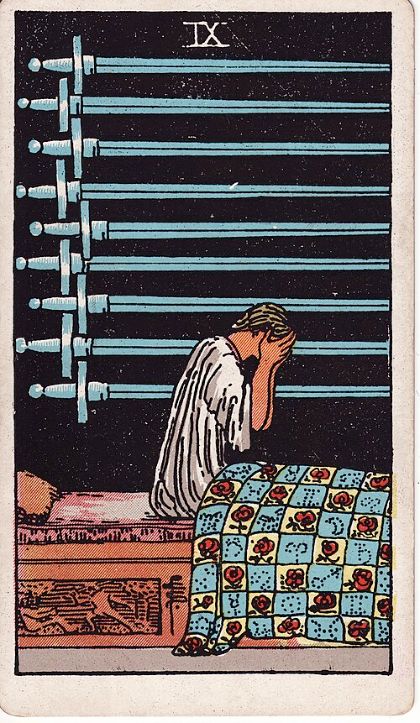
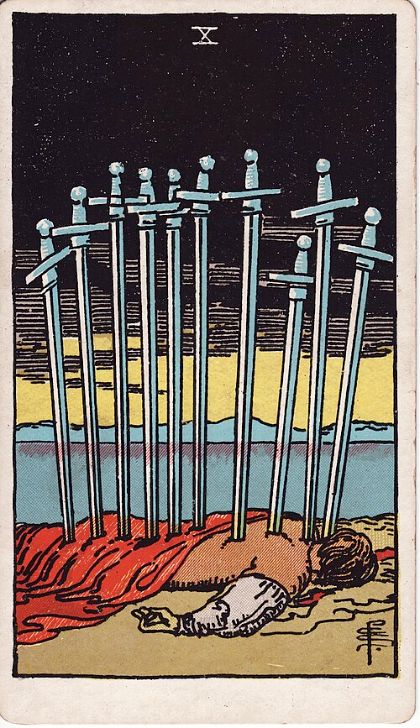
The later cards look heavy, but there is another way to see them. On the Eight, the woman is blindfolded and bound, yet the swords only surround her. They do not block every way out. Often the fence is one our own thoughts have built. On the Nine, someone sits awake in the dark with their face in their hands, but the swords simply hang on the wall and never touch them. It is the night when worry feels bigger than reality. The Ten is the most dramatic picture of all, yet beneath the black sky the horizon is turning yellow and the water is still. With nowhere lower to go, the only way left is up, so read it as the dawn after rock bottom. See the Ten of Swords meaning for more.
Court cards: four ways of handling thoughts
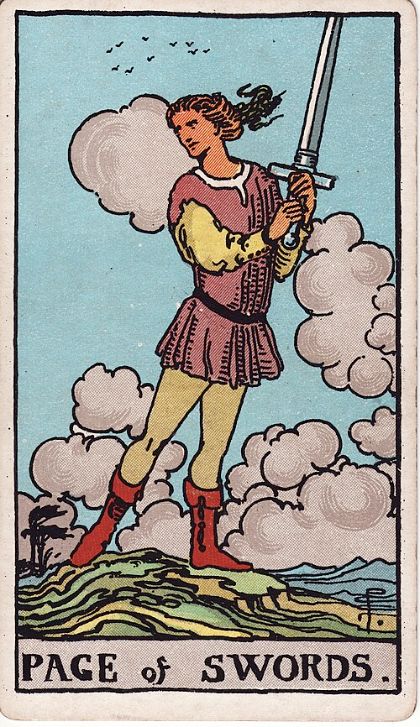
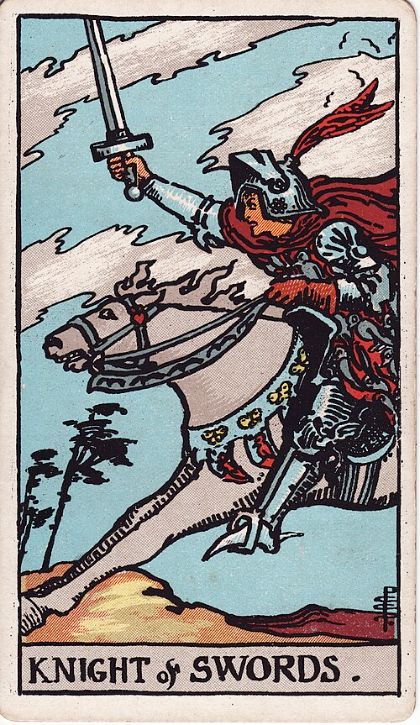
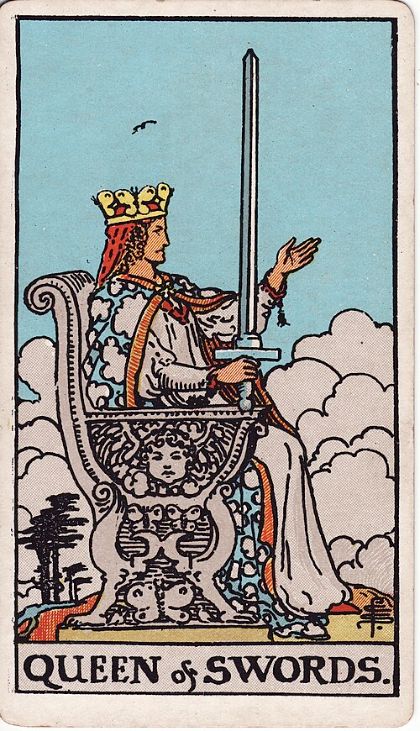
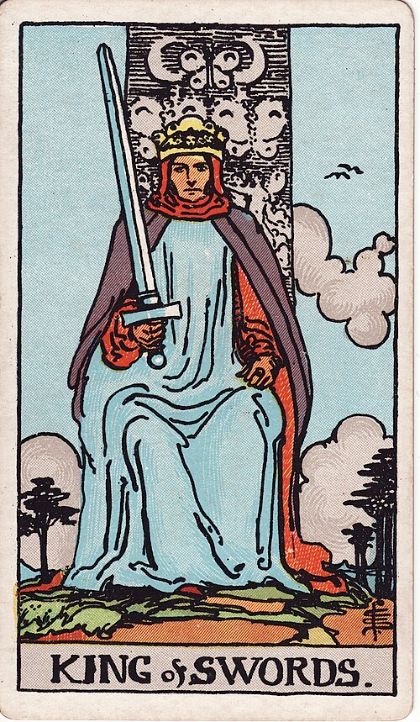
The Swords court cards describe personalities by how they think and speak. The Page holds up a sword on rough high ground and looks around, a curious newcomer. The Knight charges on a white horse, cutting through the wind, all speed and decisive action. The Queen sits in profile with her sword held straight and one hand reaching out, showing judgment that is cool but fair. The King faces us directly with his sword upright, someone who decides by principle and responsibility. Look for the butterflies carved on the thrones of the Queen and King as well. They are often read as a symbol of thoughts that change and grow.
Small details worth noticing
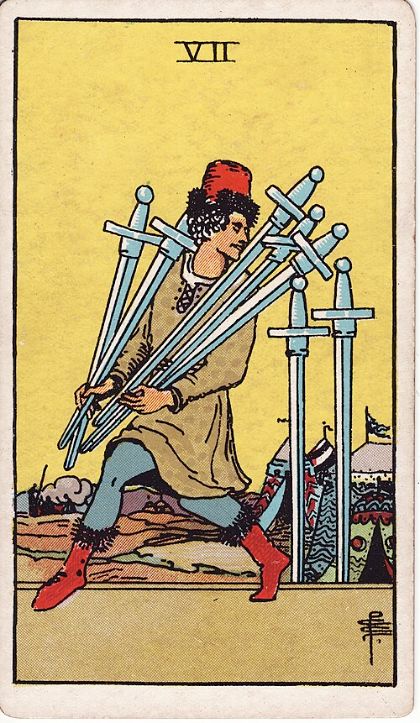
Small birds and butterflies hide all over the Swords pictures. Birds bring to mind thoughts in flight, and butterflies a mind that is changing. Watch where the figures are looking, too. Blindfolded cards like the Two and the Eight suggest you cannot see the whole situation yet, while cards where someone glances back, like the Five and the Seven, hint at something still nagging at you.
Something to remember with Swords
There is no need to worry the moment a Swords card appears. It is more of a nudge to check the weather in your own head. If your mind feels crowded, try writing your thoughts down, or give a decision one more day. You can find the other suits and the Major Arcana in the Minor Arcana originals and the 1909 original tarot art. The image sources for this page are listed at the bottom.
The 1909 originals
Tap a picture to open its card meaning page.
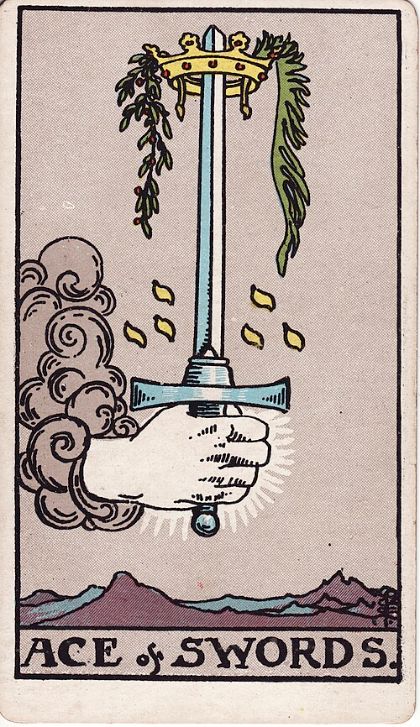
Card meaning →
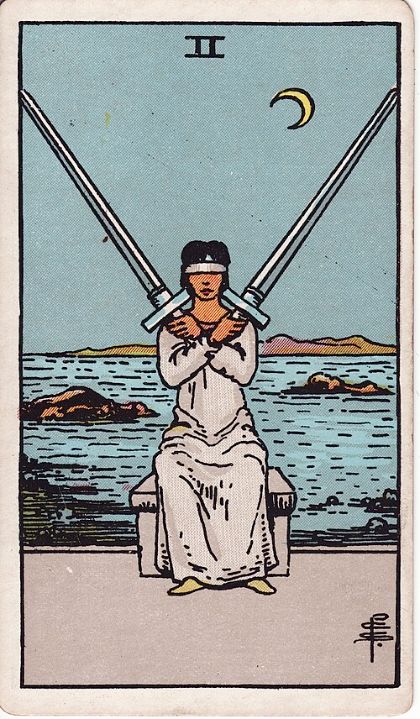
Card meaning →
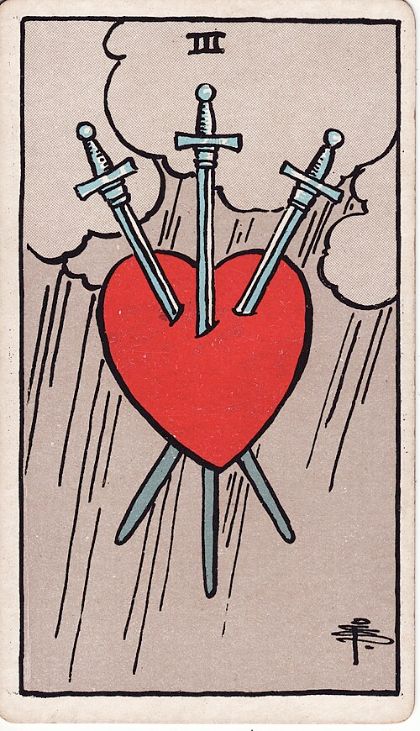
Card meaning →
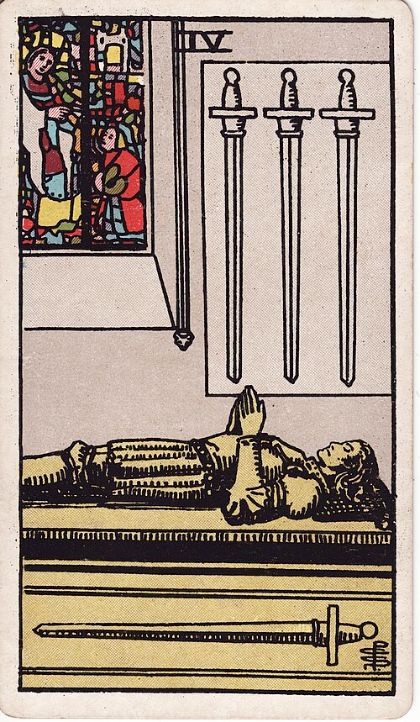
Card meaning →
Card meaning →
Card meaning →
Card meaning →
Card meaning →
Card meaning →
Card meaning →
Card meaning →
Card meaning →
Card meaning →
Card meaning →
Image sources
The images on this page are scans of the first printing (1909 to 1910) of the tarot drawn by Pamela Colman Smith, taken from public domain files on Wikimedia Commons. The original artwork is out of copyright, but later recolored editions may be separate copyrighted works. The card art used elsewhere on Fortune Alley is our own separate design.


